Reframing matrescence - a postpartum wellness app
finally built around the mother, not the baby.
Client
DH Conference
TIMELINE
Figma, MS Cards, Lyssna
Tools
8 Days
Role
1 of 3 UX/UI Designers
The Brief
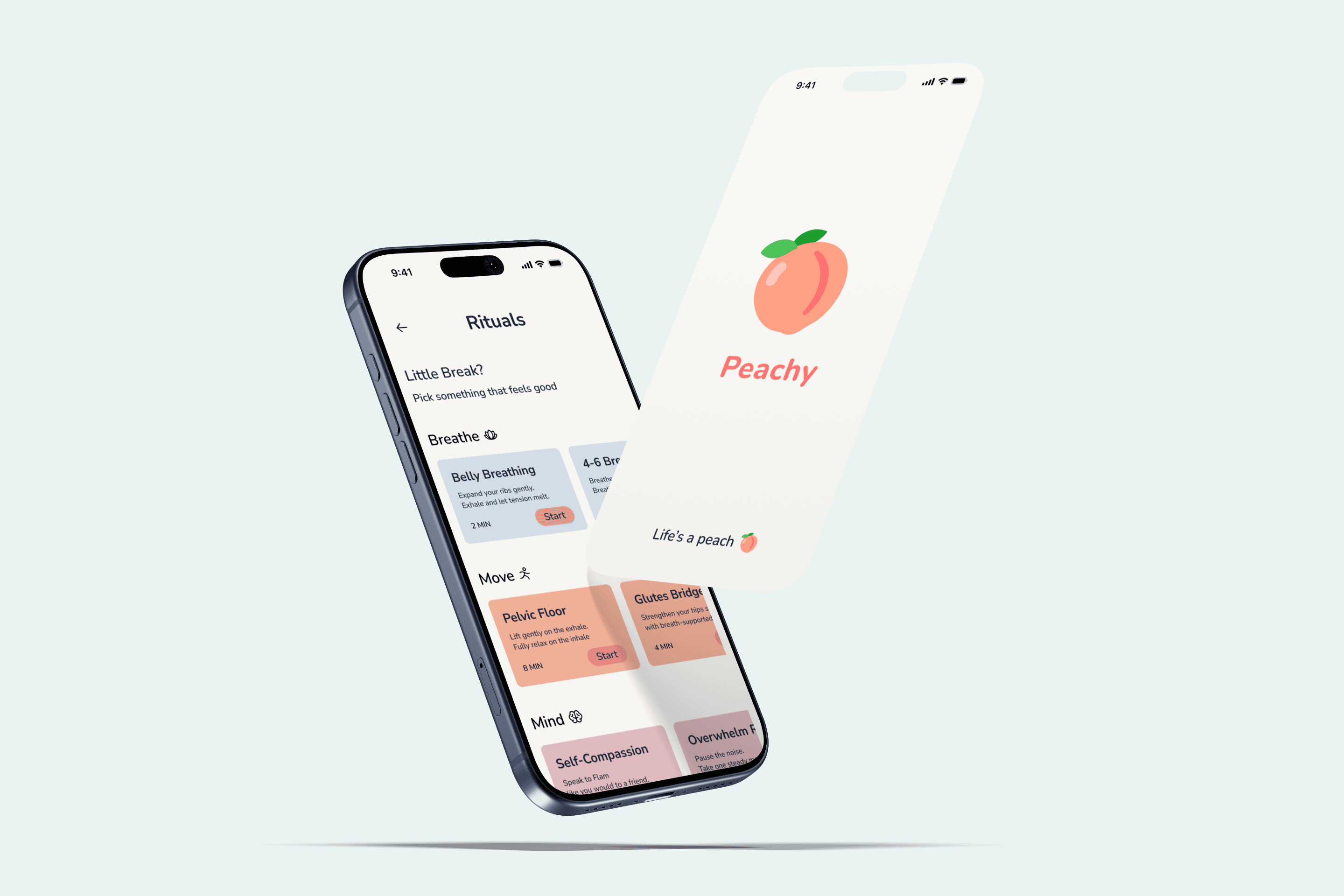
The app market has hundreds of tools tracking a baby's feeds, sleep, and diapers, and not one credibly supports the mother navigating matrescence (physical recovery, identity shift, and emotional health). Our brief was to identify an unserved need in health tech, and what we found was a market gap: a generation of mothers who had been quietly written out of postpartum care.
This was a concept-to-prototype project, from a UX strategy blueprint to a high-fidelity prototype built to Apple UI standards and micro-interactions, for client Daily Health Conference.
Postpartum crisis remains
Search interest in postpartum depression is still rising, with social listening surfacing words like stress, understanding, challenge, body, and support across online conversations.
Design Process
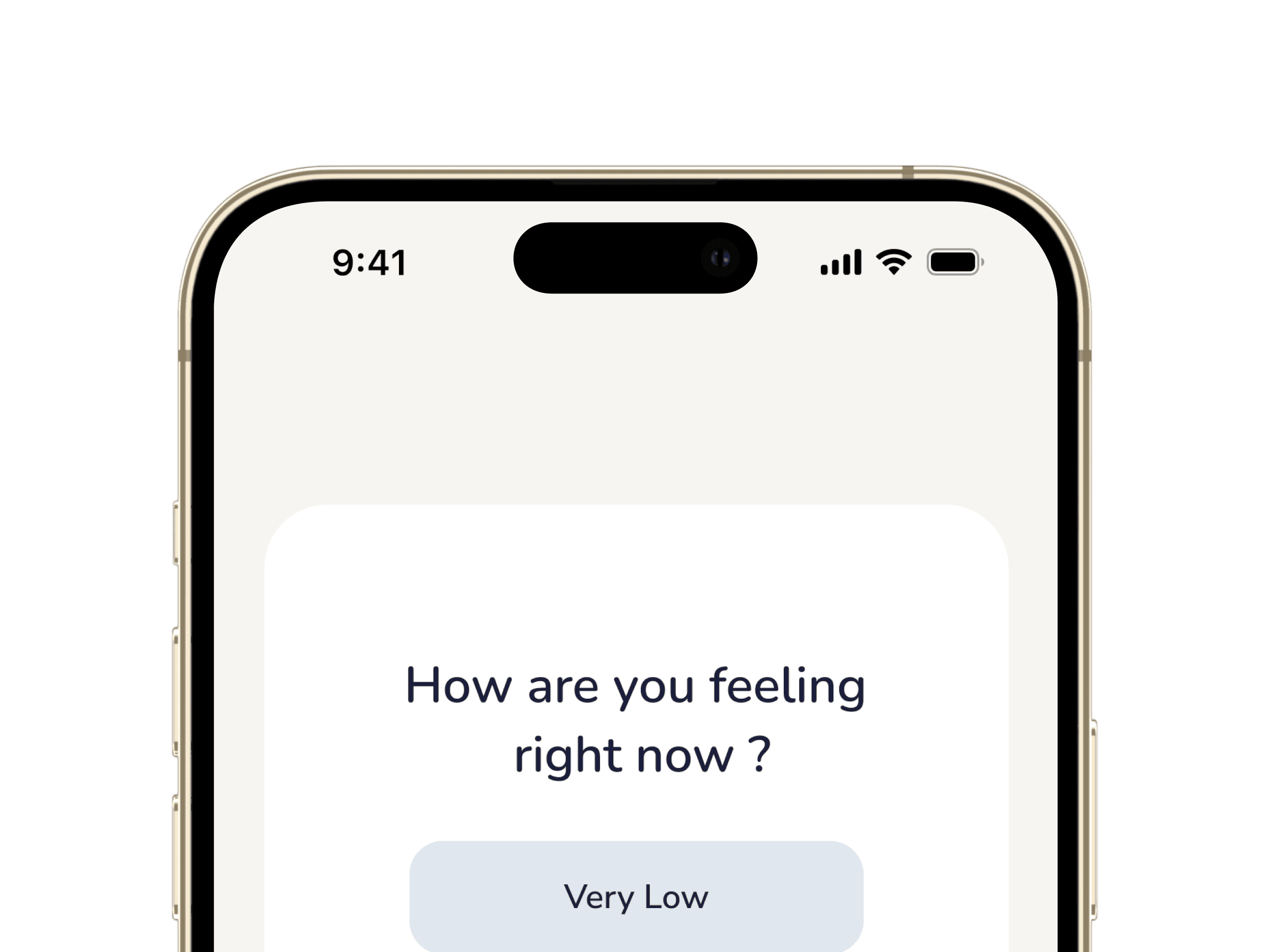
Five user interviews with 4 mothers and 1 father uncovered a persistent gap: postpartum parents were not looking for another task to complete. They needed someone to ask how they were doing, a need the market had overlooked. What came through consistently in research was the 3am moment: exhausted, awake with the baby, doom-scrolling for reassurance. Designing for that moment meant building for someone half-asleep, one hand occupied, with no mental energy to spare, so every unnecessary step, every extra tap, and every friction point that stood between her and support became something we stripped out. The copy went through a similar reckoning. Our early screens were triggering the opposite of what we intended. Words like "goals" and "targets" were creating anxiety rather than comfort, so we rewrote every screen from scratch, shifting the language from productivity to supportive, which became the tonal foundation of the app.
Unasked, unheard.
"Nobody asked me how I was."
"I was happy.. but didn't feel happy."
"Both. Alone with the baby, and lonely."
"It would be nice to talk to somebody, even a chatbot."
Design Decisions
Three rounds of concept and usability testing determined the four features that made it through to the final design.
[Flam] A voice-enabled AI companion available at 3am, delivering on-demand emotional support, gentle nudges, and evidence-based guidance without judgment.
[Micro-habit Rituals] Self-care moments completable in under 2, 5 or 10 minutes, requiring no willpower, no cleared schedule, and no streak to maintain.
[Audio-to-Text Journaling] Hands-free journaling that lets mothers log thoughts and emotions without needing to type, designed for someone with one hand always occupied.
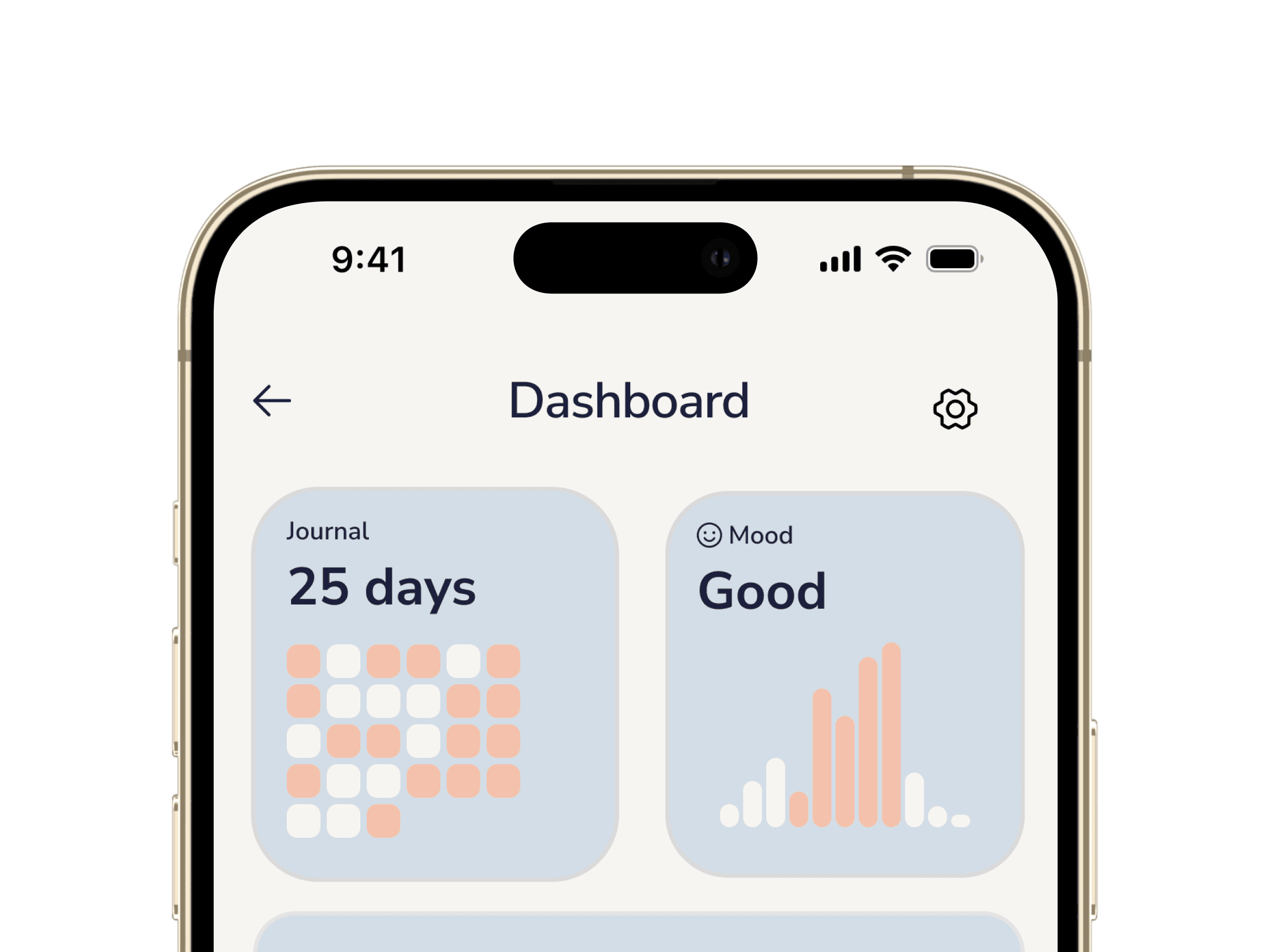
[Visualisation Dashboard] A non-judgmental progress tracker where even a zero carries meaning, built for someone already overwhelmed and simply trying.
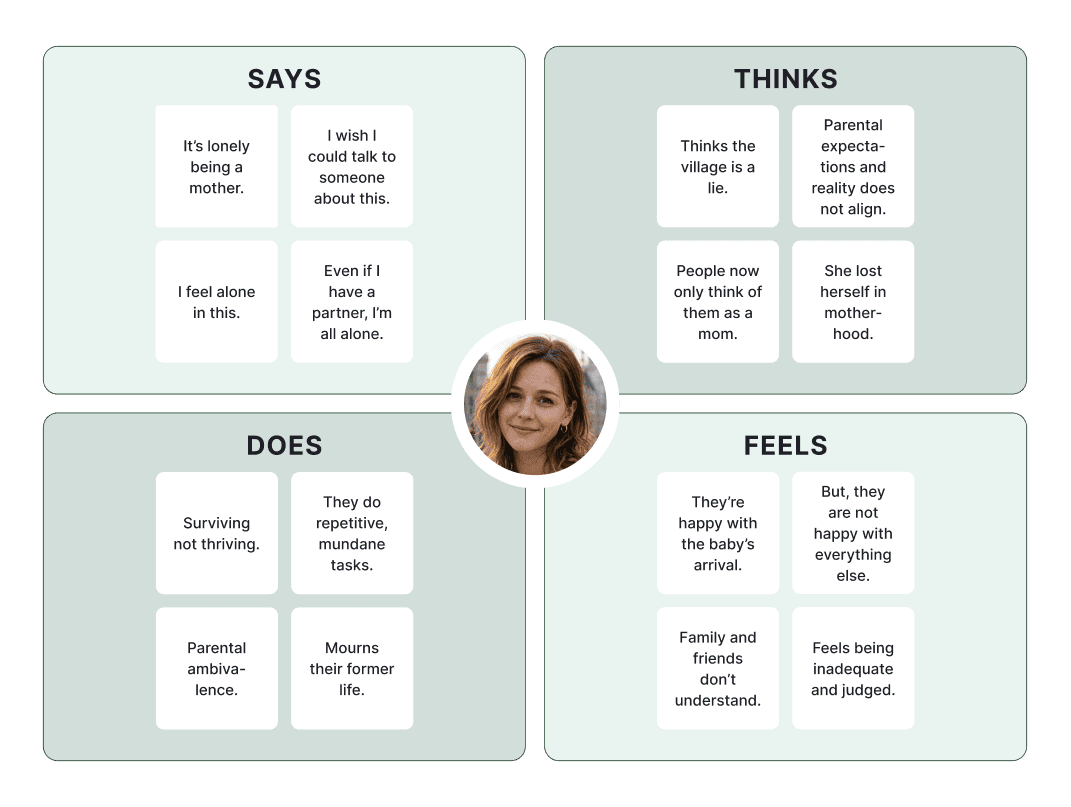
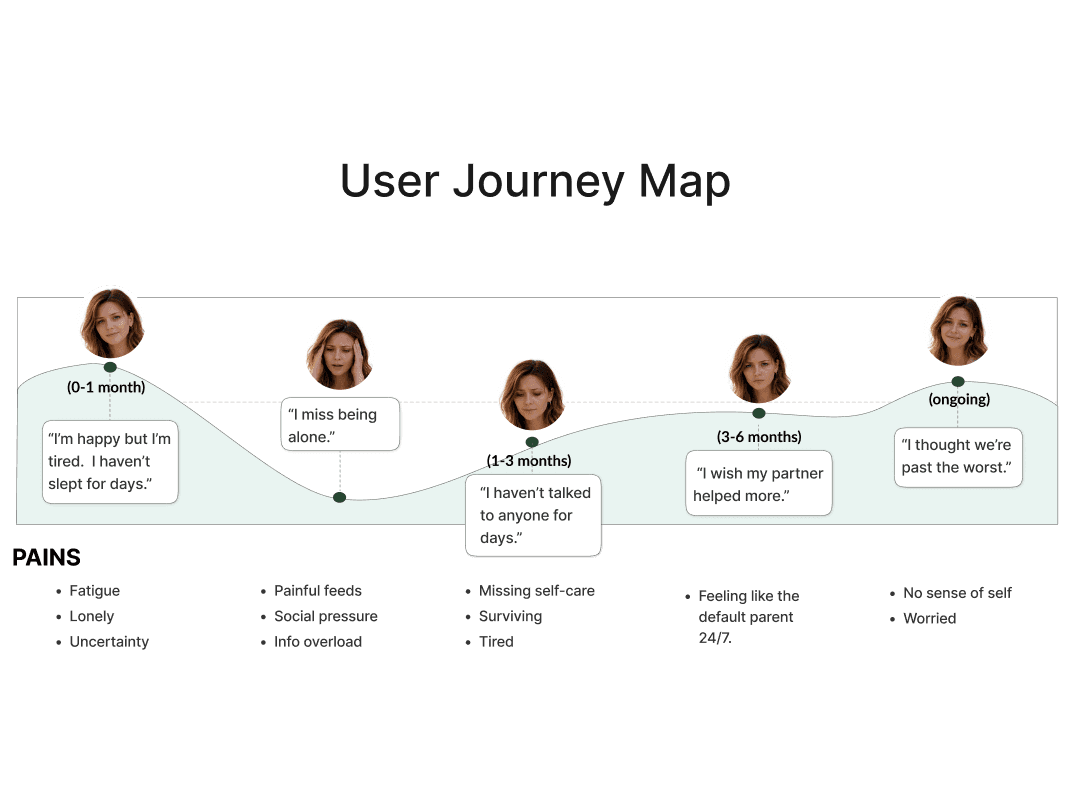
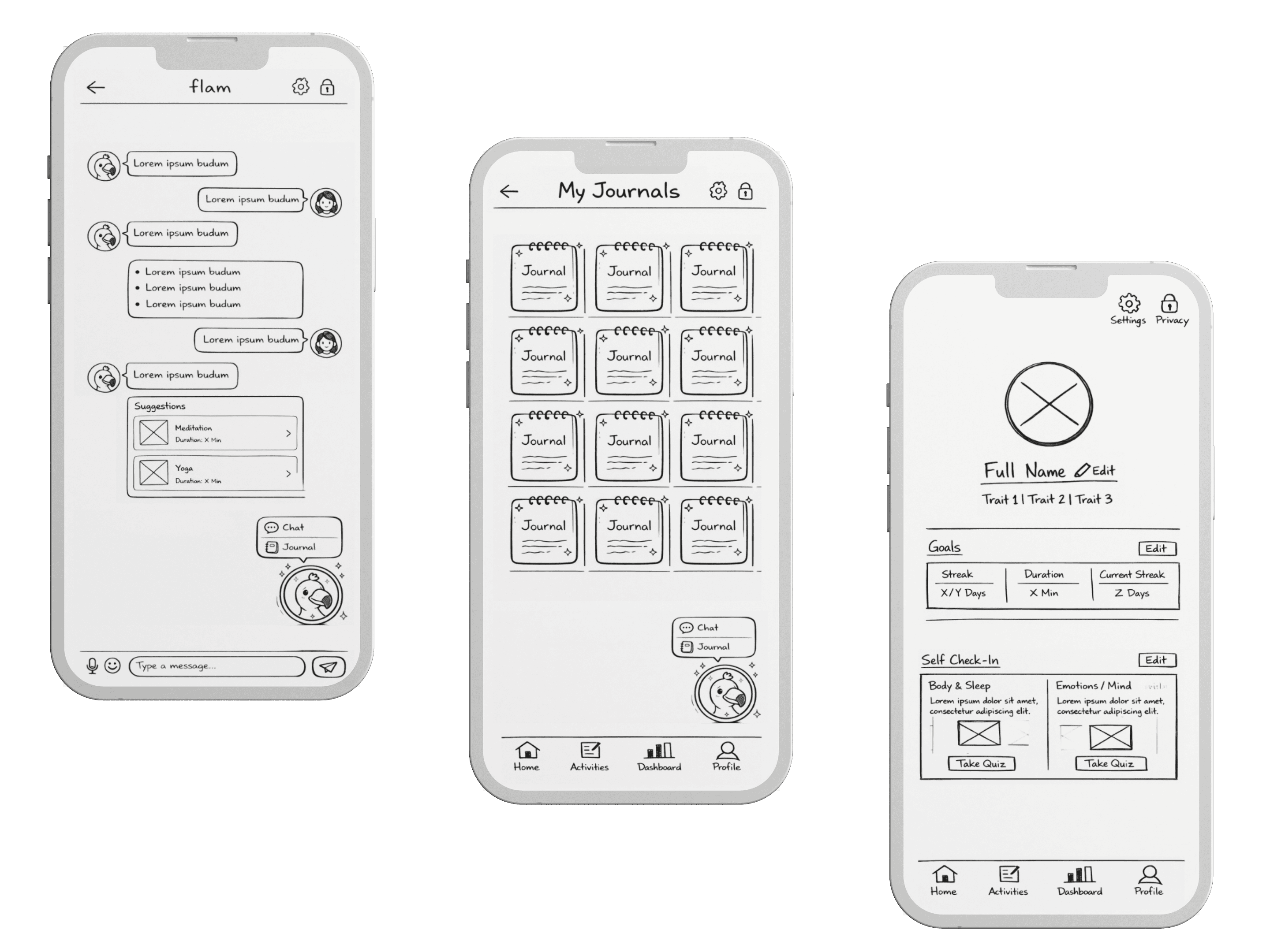
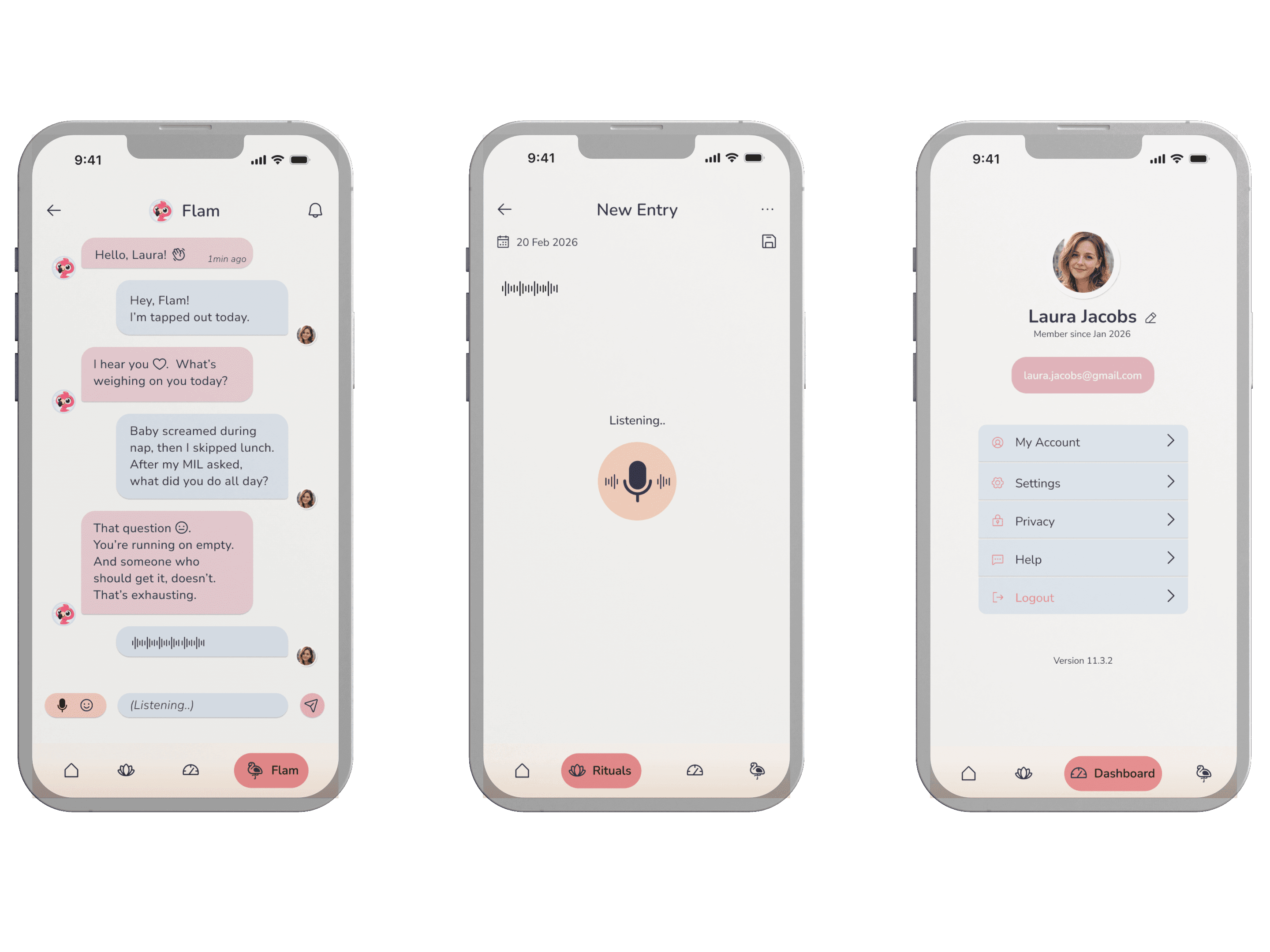
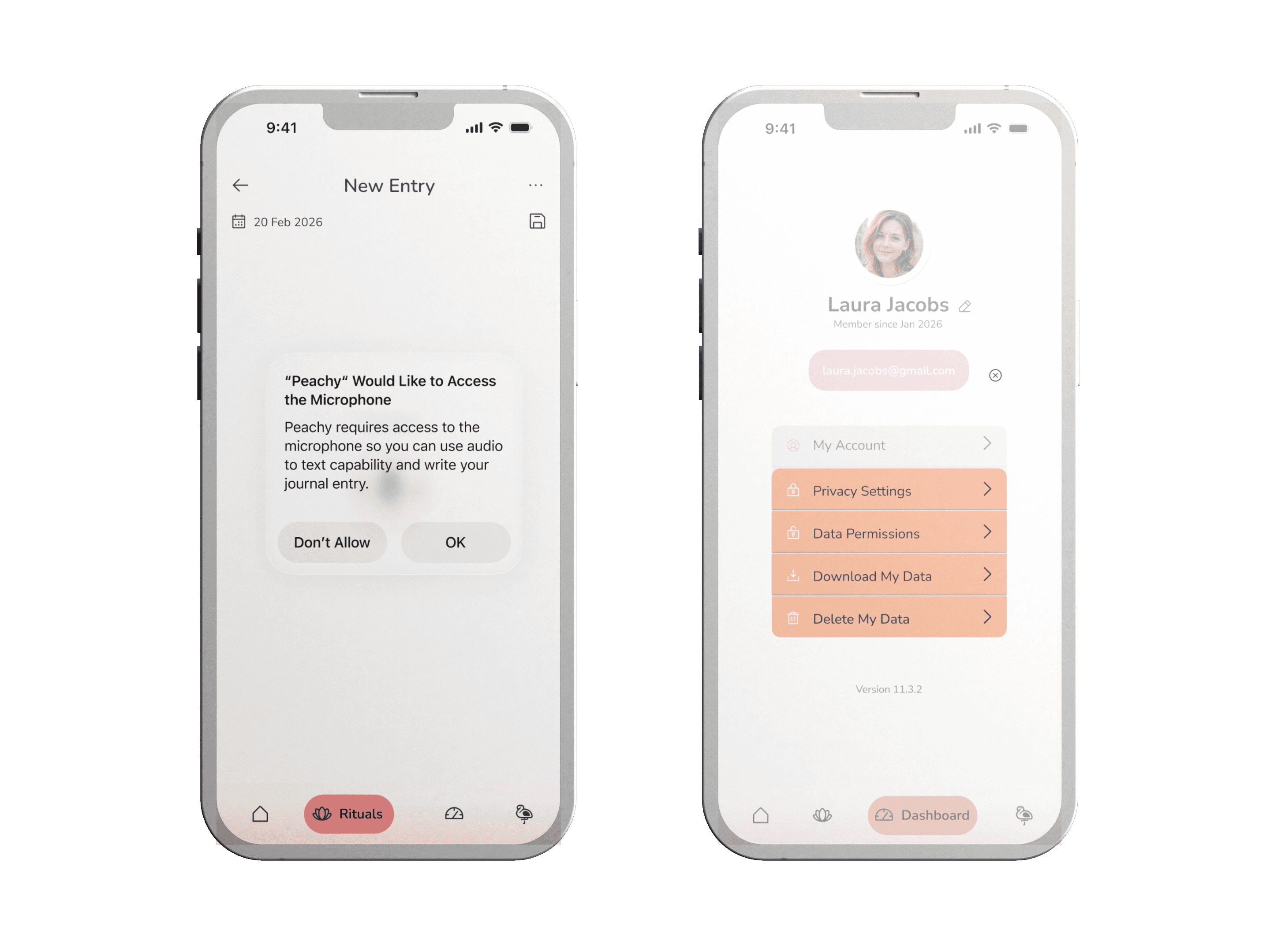
Research synthesis I developed spanning an empathy map and artifacts covering concept sketches, primary screens, screen states, and accessibility testing, alongside a user persona and journey map co-created with the team.
Project Outcome
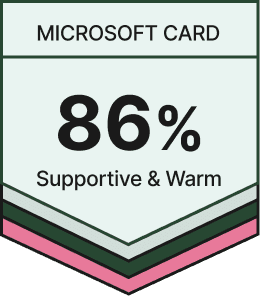
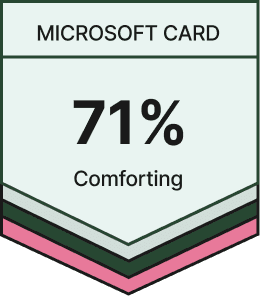
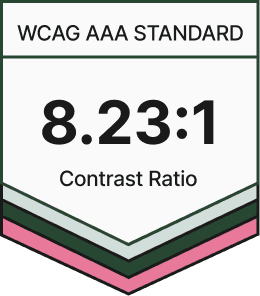
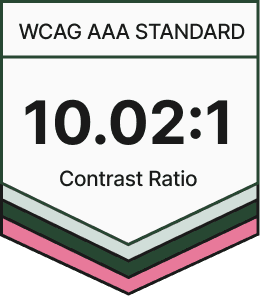
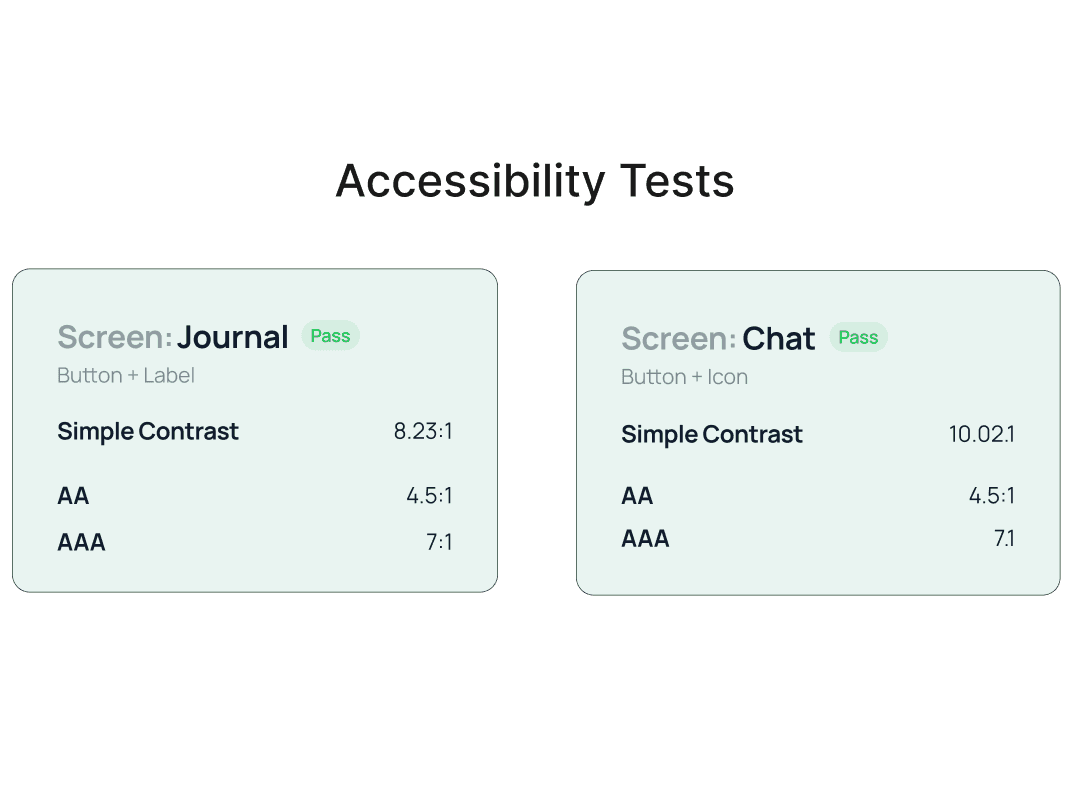
Desirability testing using Microsoft Reaction Cards confirmed the product was landing as intended, with Warm and Supportive both scoring 85.7% and Comforting at 71.4%. Final screens passed WCAG AAA accessibility standards, with contrast ratios of 8.23:1 and 10.02:1.
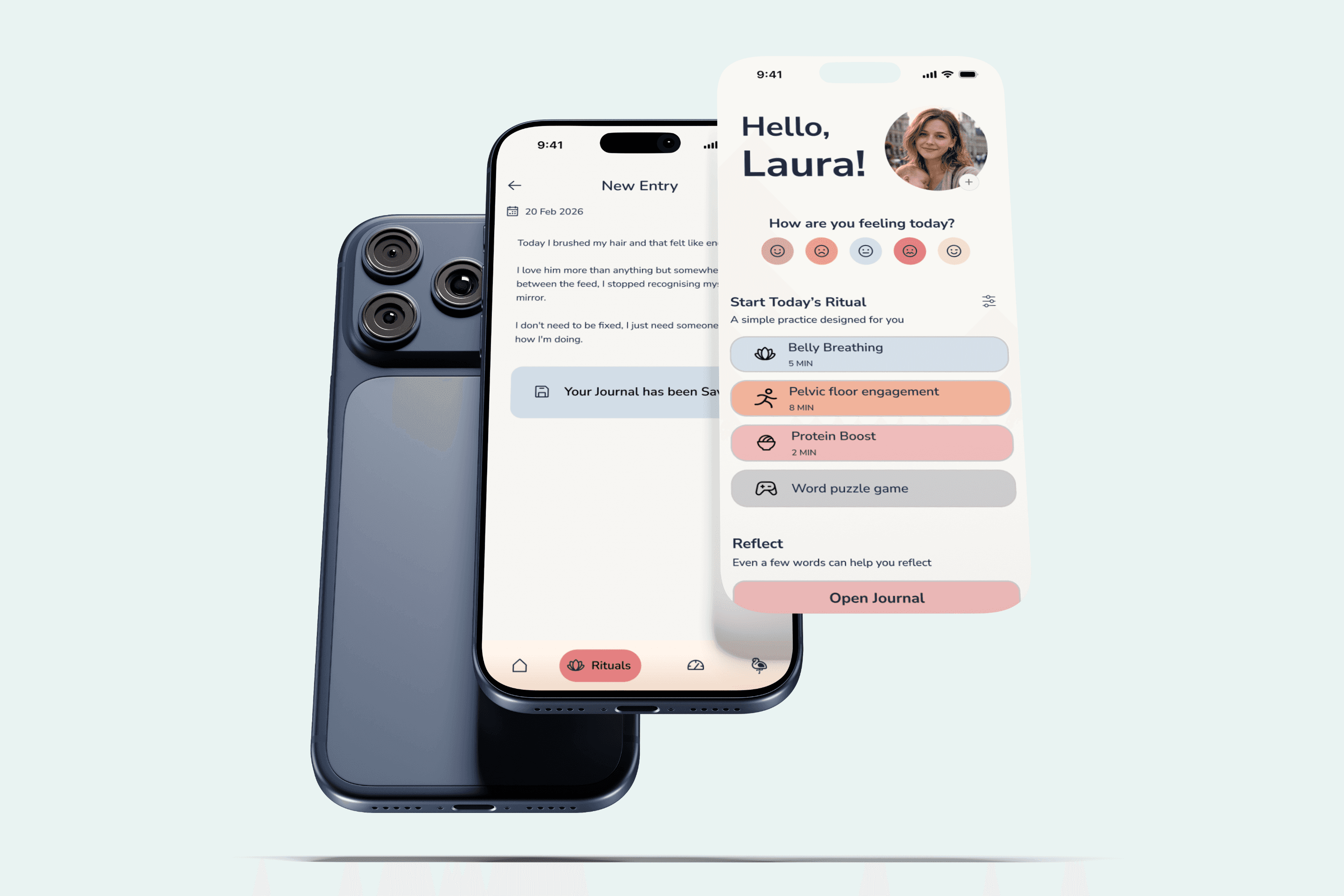
The prototype was presented to the IronHack jury as part of a health and wellness brief.